
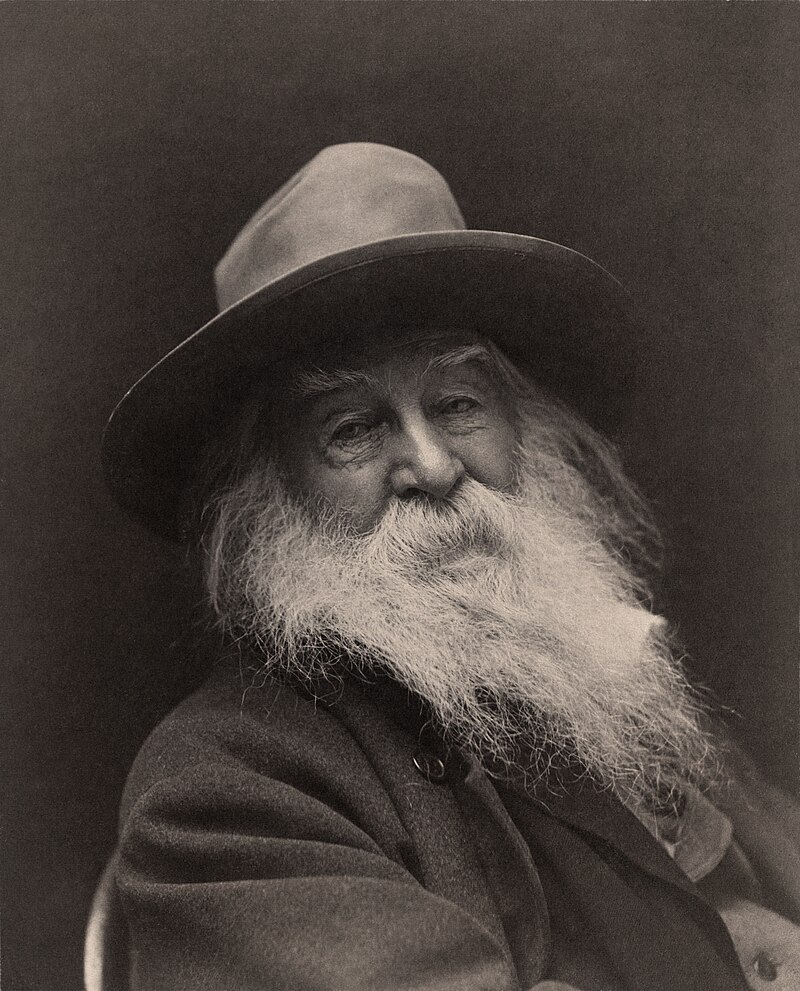
God bless you Walt Whitman
Thank you for your compassion,
For your passion.
For the soft touch on a dying soldier’s head,
For the gentle things you said.
God bless you Walt Whitman,
Praise the song of yourself,
Thanks be for the books on the mantelshelf
God bless you Walt Whitman,
Cheer for the multitudes contained,
For the love of man explained,
For the light and the dark,
For the soft remark,
For the acceptance of time,
For the free without rhyme.
God bless you Walt Whitman.
For my face toward the sun,
For all said and done,
For the work of the stars,
For the rising of Mars.
God bless you Walt Whitman.
God bless you Walt Whitman.
Summary
The poem “God bless you Walt Whitman” aligns with several characteristics of the Beat Generation poetry movement. This can be inferred through its form, themes, and homage to Walt Whitman, who himself was a significant influence on the Beats.
Here are the elements that suggest it belongs to the Beat Generation school of poetry:
- Tribute to Walt Whitman: Walt Whitman was a major influence on the Beat poets. They admired his free verse, his themes of individuality, democracy, and the human experience. The repeated invocation of Whitman in the poem highlights this connection.
- Free Verse: The poem does not follow a strict rhyme scheme or meter, characteristic of Beat poetry, which often employs free verse to allow for more spontaneous expression.
- Themes of Compassion and Universality: The poem praises Whitman for his compassion, his inclusive view of humanity, and his acceptance of both light and dark aspects of life, all of which are themes central to Beat poetry.
- Personal Tone: The poem has a conversational, personal tone, another hallmark of the Beat poets, who often wrote in a direct and intimate style.
- Spiritual and Cosmic Imagery: References to the stars, the sun, and Mars reflect the Beats’ interest in both the spiritual and the cosmic, seeking connections between the personal and the universal.
Based on these characteristics, it is reasonable to place “God bless you Walt Whitman” within the Beat Generation school of poetry.
Literary Critique by Alexis Ingram
Literary Critique of “God Bless You Walt Whitman” by Francis Winifred
“God Bless You Walt Whitman” by Francis Winifred is a poignant tribute to one of America’s most iconic poets, celebrating his enduring influence and humanistic values. This poem is a heartfelt homage, reflecting both reverence and gratitude for Whitman’s literary and philosophical contributions. Through its free verse structure and thematic richness, Winifred’s poem encapsulates the spirit of Whitman and, by extension, the Beat Generation, which held Whitman as a guiding light.
Structure and Form
The poem’s structure is marked by its free verse form, echoing Whitman’s own style. This lack of strict rhyme or meter allows for a fluid and spontaneous expression of emotion, mirroring the organic and free-flowing nature of Whitman’s work. The repetition of the phrase “God bless you Walt Whitman” serves as a refrain, lending the poem a rhythmic consistency while emphasizing the poet’s veneration.
Themes and Imagery
Winifred delves into themes of compassion, universality, and the celebration of the human spirit. The poem acknowledges Whitman’s gentle and compassionate nature, particularly in lines such as “For the soft touch on a dying soldier’s head” and “For the gentle things you said.” These lines evoke Whitman’s role as a caregiver during the Civil War, highlighting his empathy and humanity.
The poem also celebrates Whitman’s embrace of the multitude and his exploration of the self, as seen in “Cheer for the multitudes contained, / For the love of man explained.” This echoes Whitman’s seminal work “Song of Myself,” where he explores the complexity of the individual and the interconnectedness of all people.
Imagery in the poem is both terrestrial and cosmic, with references to “the rising of Mars” and “the work of the stars,” suggesting a sense of wonder and a connection to the broader universe. This cosmic perspective aligns with the transcendental elements in Whitman’s poetry, where the individual is often seen in relation to the infinite.
Tone and Voice
The tone of the poem is one of deep admiration and reverence. The repeated blessings underscore a spiritual and almost prayer-like quality, indicating the profound impact Whitman has had on the poet. The voice is intimate and personal, creating a sense of direct address to Whitman, which enhances the emotional depth of the tribute.
Literary and Historical Context
Placing this poem within the context of the Beat Generation is apt, given the movement’s profound respect for Whitman. The Beats, including figures like Allen Ginsberg and Jack Kerouac, viewed Whitman as a literary forebear who championed freedom, individuality, and a break from conventional norms—principles that the Beats themselves espoused. Winifred’s poem captures this spirit, serving as a bridge between Whitman’s 19th-century transcendentalism and the 20th-century Beat ethos.
Conclusion
“God Bless You Walt Whitman” by Francis Winifred is a beautifully crafted homage that not only honors Whitman’s legacy but also reaffirms the timelessness of his ideals. Through its free verse form, rich thematic content, and heartfelt tone, the poem successfully captures the essence of Whitman’s influence on American poetry and culture. Winifred’s work stands as a testament to the enduring power of Whitman’s vision and his profound impact on generations of poets who followed.
 Inalienable Write