
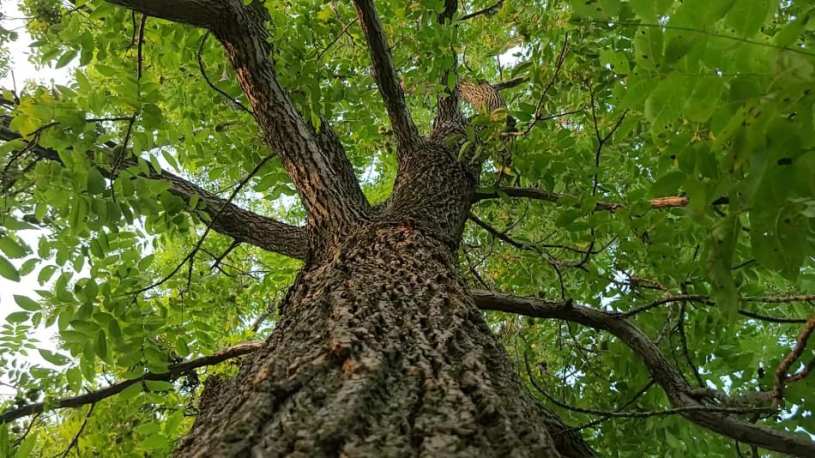
There below the walnut tree lies nuts and memories.
There below the walnut tree, we stooped to pick nuts up,
Then, playfully broke them upon the driveway to eat,
Or threw them over the fence at the old red phone box.
Below the walnut tree, there were conversations held,
Where my father sat and spoke with uncles about war,
About those not returned from far off prison camps,
The price of petrol, and unforgotten fishing stories.
The walnut tree casts cool shade over scratching chickens,
Who lay some roots bare near some long empty beer bottles,
Placed at the base of the trunk to be forgotten too,
Like the names of those not returned, the price of petrol,
Burned into the misplaced past, with names of prison camps.
The block is cleared now and the walnut tree is removed.
Some empty nut shells lay in the pushed up heap of dirt.
The red phone box too is gone, the memories all put
On the back of a truck and driven to a place where
Red phone boxes and memories of giggling children,
Throwing walnut shells, talks of prison camps, and uncles,
Are buried in a yard below some scraps of iron.
Memories are like spirits who will rise from the earth,
Climb out from the soil, through the scattered scraps of iron,
And sombrerly make their way past the dead red phone box,
Drifting back to Mundy Street and to the empty block,
And in the dim dusk sunlight, whisper to each other,
Of unforgotten fishing stories, and too often,
Wounds from war reopened, only to bleed upon the roots
In the cooling shade of the ghost of the walnut tree.
Critique by Alexis Ingram
Critique of “The Walnut Tree” by Francis Winifred
Themes and Imagery
Francis Winifred’s poem “The Walnut Tree” explores themes of memory, loss, and the passage of time, utilizing the walnut tree as a central metaphor for a bygone era. The poem weaves personal recollections with broader historical and social issues, such as the impact of war and the inevitability of change. The imagery is vivid and evocative, painting a picture of a once vibrant scene now reduced to remnants and ghosts.
The walnut tree serves as a symbol of stability and continuity in the narrator’s life. Under its shade, familial interactions and childhood play occurred, juxtaposing the innocence of youth with the somber discussions of war and loss. This contrast highlights the multifaceted nature of memory, where joy and sorrow coexist.
Structure and Form
The poem is structured in free verse, which suits the reflective and narrative quality of the piece. The lack of a rigid rhyme scheme or meter allows the poem to flow naturally, mimicking the way memories resurface and meander through the mind. The repetition of the phrase “below the walnut tree” acts as an anchor, grounding the reader in the physical setting while the narrative delves into the abstract realm of memory.
Language and Tone
Winifred employs a tone that is both nostalgic and melancholic. Phrases like “nuts and memories,” “names of those not returned,” and “wounds from war reopened” underscore the bittersweet nature of reminiscence. The language is simple yet poignant, effectively conveying the depth of the narrator’s emotions without resorting to overly complex or ornate diction.
The poem’s descriptive language enriches the narrative, making the past feel tangible. The depiction of “scratching chickens” and “long empty beer bottles” adds a layer of realism, grounding the reader in the sensory details of the setting. The imagery of the “red phone box” serves as a poignant reminder of the passage of time and the obsolescence of once-familiar objects.
Symbolism
Symbols play a crucial role in this poem. The walnut tree symbolizes a central point of stability and memory, while the red phone box represents communication and connection, now lost to time. The references to war and “prison camps” evoke a sense of historical trauma, and the empty beer bottles and nut shells signify remnants of the past that persist despite the physical clearing of the block.
The poem’s closing lines are particularly powerful, with the spirits of memories “climb[ing] out from the soil” and “drifting back to Mundy Street.” This imagery of resurrection and return suggests that memories, though buried, never truly fade away. They linger, influencing the present and reminding us of what once was.
Emotional Impact
“The Walnut Tree” succeeds in creating an emotional resonance with its audience. The personal anecdotes intertwined with historical references create a layered narrative that is both intimate and universal. Readers can connect with the themes of loss and remembrance, as these are common human experiences.
The poem’s melancholic tone invites reflection on one’s own past and the inevitable changes that come with time. The sense of loss is palpable, yet there is also a sense of reverence for the memories that endure, no matter how much the physical landscape may change.
Conclusion
Francis Winifred’s “The Walnut Tree” is a poignant exploration of memory and the passage of time. Through vivid imagery, symbolic language, and a reflective tone, the poem captures the essence of what it means to remember and to mourn the loss of the past. It is a beautifully crafted piece that speaks to the enduring power of memory and the way it shapes our understanding of ourselves and our history.
“The Walnut Tree” by Francis Winifred can be associated with several poetic schools or movements due to its themes, style, and approach. Here are a few relevant influences and schools:
1. Modernism:
- Characteristics: Modernist poetry often emphasizes themes of loss, memory, and the passage of time. It tends to focus on personal experiences and historical context, employing free verse and vivid imagery.
- Connection: “The Walnut Tree” reflects Modernist tendencies through its exploration of memory and history, its free verse form, and its introspective tone.
2. Pastoral Poetry:
- Characteristics: Pastoral poetry traditionally romanticizes rural life and nature, often reflecting on the simplicity and tranquility of the countryside.
- Connection: While “The Walnut Tree” is not purely pastoral, it does evoke a rural setting and utilizes natural elements (the walnut tree, chickens) to anchor its reflections on the past.
3. Confessional Poetry:
- Characteristics: Confessional poetry delves into the personal and often intimate experiences of the poet, with an emphasis on raw, emotional honesty.
- Connection: The poem’s personal tone, focus on family memories, and the introspective exploration of the past resonate with the confessional style.
4. Elegiac Tradition:
- Characteristics: Elegies are poems that reflect on loss and mourning, often commemorating the dead or something that has been lost.
- Connection: “The Walnut Tree” serves as an elegy for the past, mourning the removal of the tree and the fading of memories associated with it.
5. New Formalism:
- Characteristics: New Formalism is a late-20th-century movement that seeks to revive traditional forms and structures in poetry, but often with a modern sensibility.
- Connection: Although “The Walnut Tree” is written in free verse, its careful attention to imagery and narrative structure suggests an alignment with the principles of New Formalism, especially in its blending of the old (memories, historical context) with the new (modern reflection, free verse).
Overall, while “The Walnut Tree” doesn’t fit neatly into one single school of poetry, it draws from various traditions to create a rich, evocative piece that resonates with themes of memory, loss, and the passage of time.
 Inalienable Write