
(From a collection of essays “This Is Why The Aliens Don’t Visit”)
Me providing you with advice on how to become a diarist or how to write a journal would be like the Pope explaining to you where the best brothels are in Rome. He may have heard of them but has no genuine experience within them. So too it is for me and the journaling or the diarising process. Sure, I have dabbled. I have started many, but they have drifted away into the bottom draw of my desk only to be used for meeting note paper. But that does not mean I don’t value the concept of the journal/diary.
For context and so I do not need to keep writing journal/diary, I suppose we should try and make a distinction between a journal and a diary. Typically, a diary is a personal record of daily events, but it can also list thoughts and feelings based on the immediate present. A journal on the other includes a range of writing styles and includes reflections, creativity, and have a reflective view on the past, present or future. For the purposes of this article, I will consider them the same thing for, regardless of the subtle distinctions, the terms are often used interchangeably and unless the word is in the title, ie: The Diary of Kenneth Williams, I will use the term journal.
Journals take on many forms. Reflective journals: journals to practice gratitude; travel journals, journals for dreaming or for moods, art journals, creative writing journals, reading journals, goal-setting journals, fitness journals and many more, and I think I’ve started at least one of each. However, a better definition of journal is the telling of one’s life on a day-to-day basis and herein lies the problem – for me at least. A day to day telling of one’s life in a journal means you must form the habit of writing day to day; and what happens if you haven’t written today, let alone day to day? For me, if I miss a day or two, I get anxious and feel as though I need to fill in those two days. When I started my last failed journal in 2024, I felt bad that there were no entries (none saved from other failed diaries) for the past 59 years.
14 July 2025: Todays entry will be about today, and the following 4 volumes will cover the 22,206 days before today.
Then, on the 15th of July 2025 it dawned on me. Journals are often, personal reflections for private recollection. Yes, you’ve said that. But I do not want private recollection. I have an ego that wants to write for an audience, not for myself. Therefore, because my life is pretty mundane and lacks any great historical achievement, it cannot be a piece exclusively about me and what I did today, yesterday or day-to-day. I am just not that interesting. This is why I have created a BLOG. I can write down my ideas and the reflections I have on topics other than me, shape it for an audience other than myself, miss a day here and there, and the world will not end. This piece itself was started on Monday and finished on Friday. Importantly, the BLOG can give the reader glimpses of me without laying my entire collection of dirty laundry out for all to see. In fact, through this process, I can ensure that truth does not stand in the way of a good story, whereas a journal would lack credibility without that truth.
15 July 2025: Today I went to the zoo and rode a zebra.
No, you didn’t. you did nothing of the sort.
So, not journaling is fine for this writer, but what about you?
The practice of writing a diary or a journal is thousands of years old and thank heavens it has. Without that practice, we’d not have historic accounts of daily life of ancient people or the gems that have been left to us to enjoy, such as The Diary of Samual Pepys, The Kenneth Williams Diaries, Charles Darwin’s Diary of the Voyage of HMS Beagle or The Diary of a Young Girl by Anne Frank, just to name a few.
Anne Frank’s collection of writings written during the two years she and her family hid from the occupying Nazis in Amsterdam has been published in some seventy languages. It covers a tragic and turbulent period of Dutch, and world, History.

Anne Frank who saw her diary as a way to reflect her experiences.Apart from sharing her thoughts on personal matters and future hopes, Anne was responding to a radio broadcast which called for individuals to preserve personal documents as historical records. This broadcast inspired her to redraft her diaries with an audience in mind. Anne frequently describes the harsh realities faced by Jews at the time. She recounts incidents of persecution, arrests, and deportations, as well as the unsettling disappearances within their community. The ever-present anxiety of being discovered while in hiding deeply affected Annes and her family’s daily existence. Additionally, Anne repeatedly notes the compulsory identification measures, such as Jews being forced to wear the yellow star. Her firsthand account to the terrible conditions suffered by the Dutch, and particularly those of the Jewish faith is an important record of WW2 atrocities. The Diary of a Young Girl has been made into a play in 1955, a movie in 1959 and has been listed many times as one of the most important books of the 20th century.
I count my blessings that the worst I could ever write about in the past 60 years is being locked down during the COVID 19 pandemic, the loss of my parents, the ending of a marriage, a couple of job failures and a life lived under the cloud of depression and anxiety (minor by some standards). What is interesting is that none of these topics have made it to my BLOG WRITING PROMPT list. In fact, topics such as COVID 19, marriage failure and living with depression are on the taboo list and will not get an airing (outside of brief mentions such as this).
Personally, as I articulated in a previous article, I find the mundane reflection on daily events quite boring, especially if one is actively trying to write for an audience. I cannot understand why one would record the weather or the speed of the wind or the price of bread. Having said all that, among some 2000 or so ink tablets found a few miles behind Hadrian’s Wall at Vindolanda, there are some stone tablets which do exactly that. One such tablet reads: “I have sent you…pairs of socks, two pairs of sandals and two pairs of underpants.”

Vindolanda, where some 2000 ink stone tablets record daily life
The 5,000-year-old writings of merchants counting their sheep, Merer’s journaling on the building of the great pyramids, the philosophical writings of Marcs Aurelius, writings of monks and their chronicles to the letters written by Pliny the Younger on his eyewitness account of the explosion of Mount Vesuvius; these daily recordings from those ancient times are invaluable records of the past.
While Pleny does not mention Pompeii in his writing of the eruption of Mount Versuvius, his account provided valuable clues to the destruction of Pompeii after its discovery.
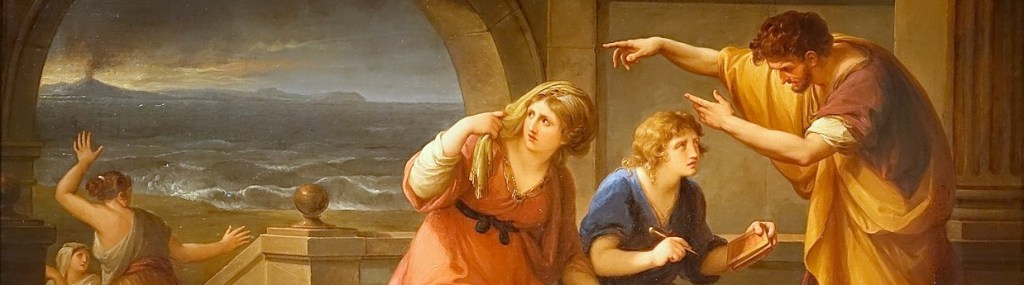
Seventeen year old Pliny’s account of Mount Versuvius shaped
a greater understanding of how Pompeii was destroyed.
“The cloud was rising from the mountain…I can best describe its shape by likening it to a pine tree. It rose into the sky on a very long “trunk” from which spread some “branches.” I imagine it had been raised by a sudden blast, which then weakened, leaving the cloud unsupported so that its own weight caused it to spread sideways. Some of the cloud was white in other parts there were dark patches of dirt and ash. The sight of it made the scientist in my uncle determined to see it closer at hand.”
While it would be egotistical, even optimistic, of me if to think that publishing my shopping list for posterity would in 2,000 years’ time be a worthy piece of writing, but those writings listed above show that the daily lists and ideas written one day, can be historical treasure in two, three or four thousand years’ time. My reference to Vegemite Toast in 3,000 years may have archaeologists scratching their heads. Indeed, a mundane reference in a 2025 diary about Melbourne’s winter weather may actually have very historical importance in 2055 when Melbourne is expected to have a climate akin to that of Dubbo in NSW.
But, outside of the historical, it is not so much the things that happen that make for great reading, but rather what the author thinks of them that is important.
16 July 2025: It is raining again and freezing cold. The cold and rain feel like a curtain hanging around my house keeping me from entering the world and it is so cold and miserable that the house is not warm enough and the room is not warm enough. Only the couch or my bed and afternoon sleep hide me from the cold.
The English actor, and raconteur Kenneth Williams was a prolific diarist. While he wrote his diaries mostly for himself, after his death they became irresistible to publishers.

Kenneth Williams
Williams’ diary recorded his daily comings and goings from around 1948 until the last night of his death. They present the reader with an understanding of one of Britain’s most loved actors. Yes, his diaries are about his daily comings and goings, but given his theatrical success at the time, the reader is privy to Williams’ experiences during the height of London in the 1950s and 1960s, including references to his work on Carry On films, gems of character assassinations of the cast of Hancock’s Half Hour, or other stabs at personalities from English entertainment. Williams would often threaten people by saying “I’ll put you in my diaries.”
Etched in between the many pages are constant references to his own emotional pain caused through shame regarding his homosexuality, his lack of finding real love, depression and, in the end, physical pain caused by poor health. His diary shows a man whose private life was in stark contrast to his public persona.
Did Williams know that he was writing for an audience? I believe he must have. Acutely aware of his own stardom, fascinated by his own persona, he always knew that a post-mortem of his career would be lacking if he were not able to share his opinion of himself and others from beyond the grave. His diary entries are his voice taunting from the great beyond. But they are frank and fearless and he lays his soul bare and shares the sad reality of his life.
The diary of Samuel Pepys is valued not just for eyewitness accounts of pivotal historical events in London, such as the Great Plague of London and the Great Fire of London as well as other major historical events in 17th century London, but also for its extraordinary openness about Pepys’s own personal experiences—his affairs, anxieties, domestic life, friendships, and flaws—which make it a rare self-portrait of an upper-middle-class man of his time. His daily entries cover commonplace subjects like the weather, meals, shopping, and theatre, alongside interactions with prominent figures, making the diary a vital source for historians seeking to understand the social, cultural, and political life of Restoration London.
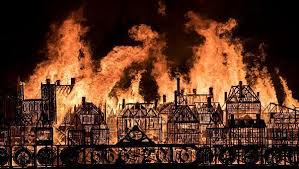
The Great Fire of London, witnessed by Samuel Pepys
Charles Darwin’s Diary of the Voyage of the Beagle is significant because it documents the five transformative year journey that laid the foundation for his theory of evolution by natural selection. The diary is the precursor to what is perhas the most important scientific writing in human history.
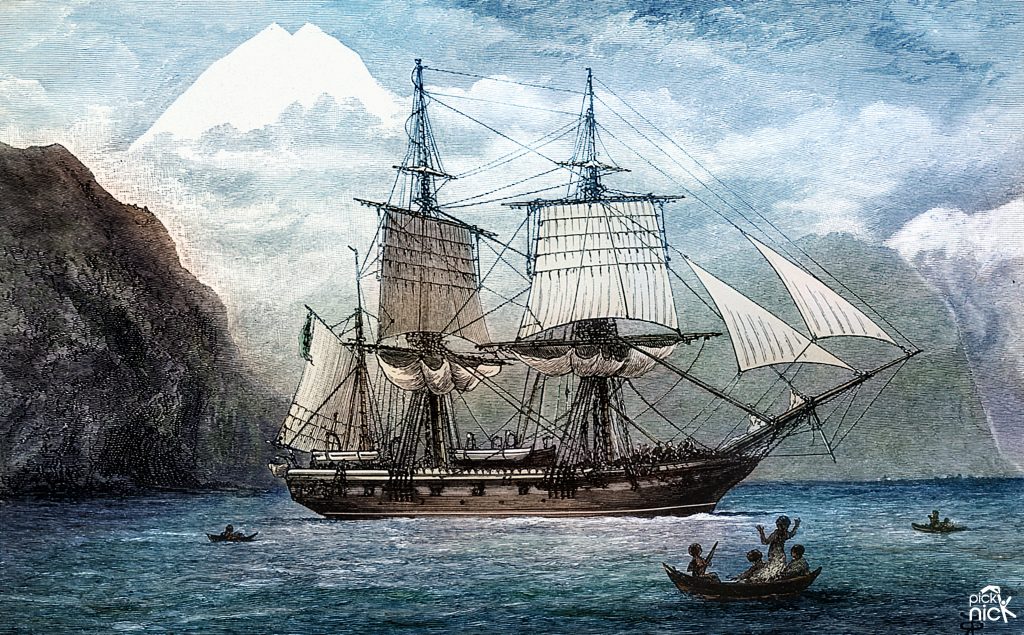
Of all my started journals and diaries, none of them seem to be the precursor to anything, except perhaps that one unfinished diary prepares the way for the commencement of another.

So, to the diarist in you. Whether it is writing a diary, journal, an essay about your life or your own personal views on stoicism, my greatest advice to you who would be a writer is….write. Write. Write, and write some more. Thinking about writing does not foster the practice. Writing does. The more you do it, the more of it you will do. And the better you will become. Yes, you will produce some garbage (like this Blog entry you may say), but as you do more of it, you’ll find and perhaps perfect your style and in three thousands years historians will be downloading your digital diary into the Mars Museum of Earthly Writings.
17 July 2025: Today I finished a blog article about writing a journal. Then I cooked dinner.
For further reading on this subject, check out
1)The Role of Diaries and Personal Writing in Ancient Civilisastions
 Inalienable Write