
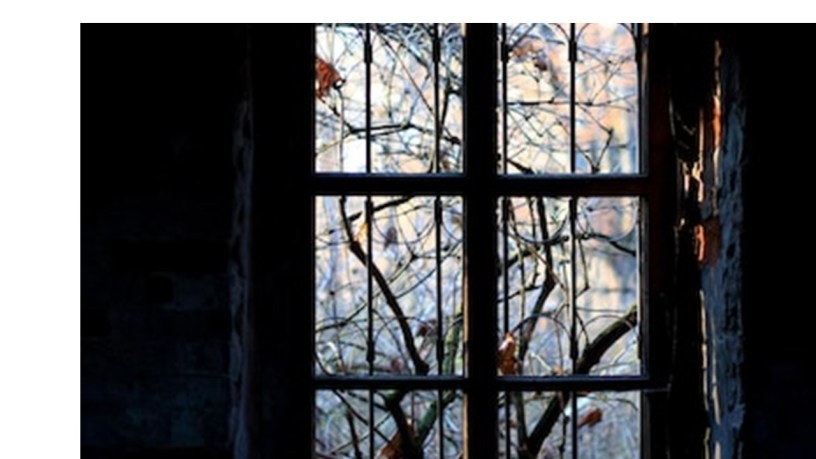
Unwashed, the window dust and dirty grey,
Hangs on the view from inside the house,
None but crumbs for the waiting mouse,
Lonely, hungry, likely not long stay.
Untold, stories’ echoes live within the walls,
Walls, covered dirty brown and faded white,
Where once the room was filled and glowed with light,
And the air alive with chatter and with calls;
Unread, the letters rest upon the sill
Expectant eyes for long awaited news
Now shut away the perfect sunlit views,
As though the clouds have rolled upon the hill.
Unknown, the passersby will soon forget
The forgotten name and the forgotten face
And soon the house, a forgotten place
The passerby with no loss knows no regret.
Unsaid, the love has passed, its lost and gone
And family names and friends lost from sight
Now no stories laughed at through the night
Where once the lamp light brightly shone.
Unnamed, photographs sit with none to see,
The much loved, gaze and smile, locked in time,
The time trapped clocks unwound forget to chime,
Cold, the fire silent like the long dead tree.
Unseen, the portraits sit where none can look,
The ancient paint sits in dark and dull
And forgotten scenes in dusty lull
Where the shadows fall on the long closed book;
Unloved, the rugs lay silent in the night,
Under footless steps of lethargic ghosts,
Who search, for warm comfort from the hosts,
Cold corridors of quietness to light.
Untouched, the proud garden flowers grow wild,
The earth not turned nor wet and weed covered,
The flowers not picked for the beloved,
The lonely playground empty of the child.
Unmoved, the kettle rusted, bare and dry,
Where cups sit empty in saucers on their side,
Where silence pours out nothingness all dried,
Like the voice all spent from the saddened sigh.
__________________________________
COPYRIGHT GRANT FENTON 2018
Critique by Alexis Ingram
The poem “Unwashed” paints a poignant picture of neglect, decay, and the passage of time. It skillfully employs vivid imagery to convey a sense of desolation and abandonment within the confines of a once vibrant and lively space. The critique below explores the poem’s strengths and areas where it might benefit from further development.
1. **Evocative Imagery:**
– The poem excels in creating vivid and powerful images. The description of the unwashed window, dirty walls, and the silent, cold fire effectively conveys a palpable sense of neglect and abandonment. These images serve to immerse the reader in the atmosphere of decay and emptiness.
2. **Effective Repetition:**
– The repetition of the “Un-” prefix in the poem’s title and throughout various stanzas (“Unwashed,” “Untold,” “Unread,” etc.) creates a cohesive thematic thread, reinforcing the sense of things left undone, unsaid, and untouched. This repetition contributes to the overall structure and impact of the poem.
3. **Emotional Resonance:**
– The poem successfully elicits an emotional response, particularly in portraying the forgotten and neglected aspects of the house. The themes of loss, abandonment, and the passage of time are conveyed with a somber and reflective tone, inviting readers to reflect on the transient nature of life and relationships.
 Inalienable Write